“ What was that?” my groggy voice suddenly agile.
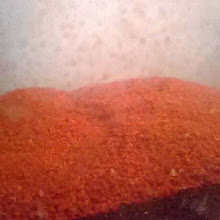
“ Oh, that is the slag Sir! Every time the slag from the company is dumped, the sky turns red.”, explained Panna, the taxi-driver.
“ What is Slag?”
“ It is the waste, Sir. Don't you know? It is what is left after the iron is processed.” The guy was positively happy with himself.
His explanation was enough to douse my curiosity for now. I was tired after a three hour flight from Delhi to Ranchi and then the journey by road- a four hour drive to the oldest steel city in the country, Jamshedpur.
But the image lingered in my head. A red horizon on a tropical night. Before the dying embers could flare up again, a truck passed by, its horn screaming and distracting.
National highway 33 is your regular highway- stretches of darkness with no street lights but comfortably crowded with passenger cars and trucks. No dividers to separate the left and the right lanes as the road is too narrow to be divided. Though narrow, this road was well-laid.
Panna manouevered through it all quite deftly.
“Sir, if you like we could come this side again tomorrow....You see on the right....is the way to the Dalma forest reserve. Nice view from the top.”
I caught the mandatory government signage in the light reflected from the headlight- “Dalma Reserve mein aapka swagat hai( The Dalma Resreve welcomes you.)”, with an image of an elephant raising its trunk in approval. I guess I was allowed to pay a visit.
We entered the township from the northern end. Much like any other small town, the highway seemed to be the main artery of life here. The chaos from the bylanes was spilling over to the main road. Paraffin-lit food stalls, unheeding pedestrians and a pan shop at every ten metres. Everything seemed to spring up right along the narrowing highway.
And just as I was about to dismiss the city as yet another rural-urban mess, all of it suddenly went quiet. I looked back. We had just crossed a bridge- the bridge over the Subarnarekha river. And as the car rolled on to the other side, the traffic eased and fell in place. No more paraffin lamps- it was an area bathed in halogen brightness. And as we moved, I noticed very little by the roadside, except for the thick trees. I had entered the Tata's Jamshedpur.
It's a small city but having been designed and planned by an industrial legend, it has its advantages. Jamshedji Nusserenji Tata, the founder of the Tata empire, searched out this spot in the early 20th century and then commissioned the township to be set up.
The plan included well-laid roads, gardens, playgrounds, schools and every other amenity that makes a township an ideal one. With time that township grew into a city. It was a beautiful plan. But what elevated it from being just a beautiful town was the beauty of the Chhota Nagpur Plateau.
It was thick and green. The chosen site was surrounded by the Dalma Hills and two rivers, Subarnarekha and Kharkhai that enclosed it at the planned township's north-west end.
All of it is alive today along with the industrial buzz of the city. It is a plan well-executed.
My guest house lay in the downtown area of Bistupur- roughly a single stretch of road that houses all the tony outlets in the city. A large section of the shopping area is still housed in a colonial style single level architecture. Some things are yet to change, like this area doesn't have any malls yet- an unusual and pleasing sight for the mall-tired eyes. Yawning, I checked in my hotel and had a dreamless sleep.
The next day began with an early morning walk. Yes, on holidays we are supposed to lie back and relax. But apparently it isn't the best way to see the city, or so Panna thought.
At six he was outside my door, geared up in his his blue tracks and white jogging shoes.
“Chalein Sir?”, he asked with a grin.
We hit the road about half an hour later. Thankfully, we didn't have to jog to our morning destination. We reached the city's beautifully lanscaped, Jubilee Park, in less than ten minutes.
The park is designed by the same people who were behind the Mughal Garden at the Rashtrapati Bhawan in New Delhi and the the Brindaban Gardens of Mysore- Mr. B S Nirody and Mr. G H Krumbiegel. The park was a gift to the city on the eve of the Golden Jubilee celebrations of the Tata steel- hence the name Jubilee park.
If you have seen the other two gardens, you know this one is not just a flat piece of greenery. The character is in the variety of trees and the way they have been placed.Like any other hilly town, this place too has an undulating ground, which adds another layer to the design. To my great pride, I could identify some of the trees as I jogged past them - from the local sal or teak trees to the persian cypress, Ashok and several other varieties. There's a water-work that runs right through the centre of this park. As I reached the mouth of the water-channel, I turned around to have a look at the entire stretch of the park.
If there's a sight that I would like to define the city with, it is this. In the distance you can see the Dalma hills cradling the city. Its foot dotted with all the new housing societies that are springing up along the highway. And closer to your sight is where the water-work, the fountains and the row of pruned up trees end. In the background, I could hear the siren go off. The siren that runs three times during a day- signifying the end of a shift and a beginning of another, for the workers at the Tata Steel. Where the park ended, I could see the traffic running to get to work on time. A discipline they adher to, to afford the sight before me.
We had a brief breakfast at a bengali sweet shop in the city's other big shopping area-Sakchi, named after the village that lived in its place before Jamshedpur came up. A breakfast of Chai, Samosas and Rassogula.
After which we set on our way to keep last night's promise-the visit to the Dalma reserve. Back on the highway, it took us hardly twenty minutes to get to its gates. The reserve has been specifically created for the region's elephants. It continues to house a large elephant populace and a few other wild animals. The reserve also shelters a few tribal villages. The hill is of great importance to the tribals from in and around the district. Some tribes believe it to be the abode of their tribal god, who they honour with an annual hunting festival.
As expected, the reserve was lush green, with a grey thread of a road winding through the valley and up the hill. The morning light dripped through the leaves unevenly, colouring the valley in all shades of green.
All along we kept hearing cries of elephants. Panna stayed on his guard, trying to gauge if the sound was coming from the way ahead. After a slow hour-long drive, we reached a slanted clearing, with no incidence. We parked the car and moved towards the temple at the top -originally dedicated to a tribal god. For the Hindus in the city, it has become another version of Shiva. Hence there is a bigger temple now and everyday sees a few devotees climbing up the hill.
After paying our respects to the deity we went to the hill top. Roughly at a kilometre's height from the city, we stood looking down at the century old city. The stretch of the steel factory covered almost the entire length of the city. The smoke from the chimneys slowly rising into the air. The small lake that lay just off the jubilee park. The tiny houses and tinier cars.The toy trains that entered and left the city via a toy-bridge. And of course the tiny people who ran it all.
It's no more politically correct to romanticise an industrial sight. Smoke from chimneys causes the Copenhagen summit and its likes. Yet, it was once a proud image of an industrial age.
Here in this small town -much like everywhere- else the sight before me means livelihood. As well as a way of life.
The climb down was much easier though no less guarded. I was hungry and so we headed further up the highway. After a 10 minute drive, we were at the 'Tenth Mile Stone' one of the better known restaurants in the area.
While the breakfast had a hint of bengali, the lunch was almost pure punjabi- Tandoori Roti, Kaali Dal and some seasonal vegetables. There's very little food that can claim to be authentic Jharkhandi. Most tribal dishes are quite simple and devoid of spices. Hence the spicier North (Punjabi) and East Indian (Bihari, Bengali ) food has taken over as the main fare here.
However, as Panna informed me, there is something indigenous which continues to be very popular among the tribals.
“Sir, Inko apna drink bahut pasand hai-Hadiya!” (The tribals love their home-made liquor- Hadiya, made of fermented rice), said Panna decisively in between chewing his morsel.
Another popular local drink is Mahuya, made of the Mahuya fruit.
As Panna downed his final morsel with a glass of water, he added-“Itna pasand hai Sir, ki Gaana bhi gaate hain- Pila be! Pila be! Mahuya Paani pila be!” (It is so popular that they even have songs dedicated to the drink), said Panna as he did his own little jig at the table.
I was pleasantly full. With our stomach fed, we headed back towards the city. Travelling in an arc around the Dalma hill, we reached the Dimna lake- created by damming the foot of the hill. The water is a rich, deep blue. The sun had begun its westward journey and, in the distance, we could see egrets and several other migratory birds bathing themselves in the out-stretched evening sun. And so in the lap of the hill, we got onto a thrumming motor-boat, ready to take us around the lake.
Spurred by the moving boat, the birds kept gliding across the lake. Suddenly some of them would swoop down towards the lake's surface and in what seemed like a mere touch of their beak, they were up in the air with a fresh catch.
The best time to sight them is from November to January. While you will get to see Egrets and the ducks around the year, some migratory birds visit the area all the way from Russia and Balochistan only during the winters.
Along one part of the bank were fishermen and a few weekenders visiting the lake with seemingly novice fishing rods. I wished I had one.
The boat ride done, it was still too beautiful a sight to walk away from. So we stayed back until the sunset.
It wasn't apt that it should end here. But it was. I was constrained on time. I needed more time to get to know the city. What it was like to actually live here?- As an industrial worker, as a city where a company looks after most of your needs. A city with not particularly an organic origin, an implanted city that with time fused with the life around it. The symbiosis that gives the city its own colour and character.
I was yet to know the chemical nature of it.
In the meanwhile, I happily clicked away- the birds, the fishing and the orange shade of the sky. As I waited for the evening to overwhelm me, it did- once again- as the dusk smudged into night. I continued clicking- the deep blue sky was peppered with an orange tint.

No comments:
Post a Comment